|
Ortuso Profiler Manufacture |
|
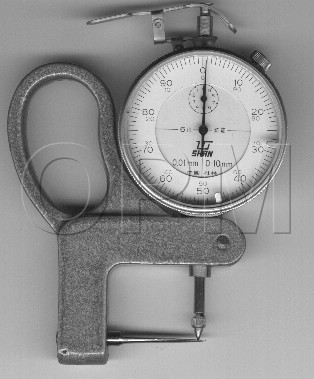
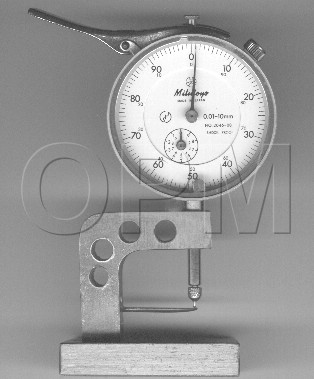
The use of a good quality micrometer, specifically modified for the measurement of oboe cane, is mandatory if consistent results are sought. Shown are two types of micrometers specifically designed for measuring cane thickness at various points on a finished reed. I use 10.50 ~ 11.00 mm tubes with a wall thickness between 1.50 ~ 1.65 mm and gouged at .40 .58 .40. I bind the shaped cane (Chiarugi shape) on a 47 mm staple to an overall length of 74 mm. These parameters allow my reeds to have the right and consistent opening at the tip. The reeds are profiled using my profiler, the crow is healthy with high and low harmonics present and with the right amount of resistance for me. Often oboists will say after scraping a reed in the usual way, "This reed is very stiff, I dont know why as I have done everything as I usually do". In most cases this is because the wall thickness of the tube is greater than usual. If the wall thickness of the tube is greater than, say, 1.70mm, the reed is usually not responsive enough unless more cane is removed from all areas. Correct binding of the cane to the staple is extremely important and a few vital factors must be observed. When binding a reed, the last turn of the string must be in line with the end tip of the staple. At this point the two sides of the cane should meet together without undue tension. Therefore, if one determines that the overall length of the bound reed (before profiling) should be, say, 75mm, the following points must be taken into account: 1) The width of the shaped cane at the belly . 2) The length of the staple and the size of its tip. 3) The diameter of the dube. The combination of these factors will play a major role in determining the length of the bound reed. One may say ' The overall legth of the bound reed is not important because one can still finish the reed to the desired length'. This is true if one does not recognise the enormous importance of the correct tip opening of the reed. This, in turn, effects the overall response and intonation throughout the instrument.
|
| OPM Est. 1993 - Site by Joseph Ortuso, last updated 10 May, 2014 All the material contained in this web site is protected by copyright laws. It is strictly prohibited to copy, distribute or use in any way this material. |